
Home

Nowadays, powerful desktop computers are used to solve complex problems in science and engineering 3D LIC research. In addition to theoretical analysis and physical experimentation, computer simulations are a fundamental tool to gain new knowledge. New interdisciplinary bachelor and master programs have been created in many universities around the world in order to meet the demand for scientists and engineers. Such an interdisciplinary education not only provides the students with a diversified technical knowledge but also prepares them to work together in research groups and industrial projects. Computational Engineering is an acknowledged subject which addresses the solution of physical problems in science and industry by means of mathematical models and computer systems.

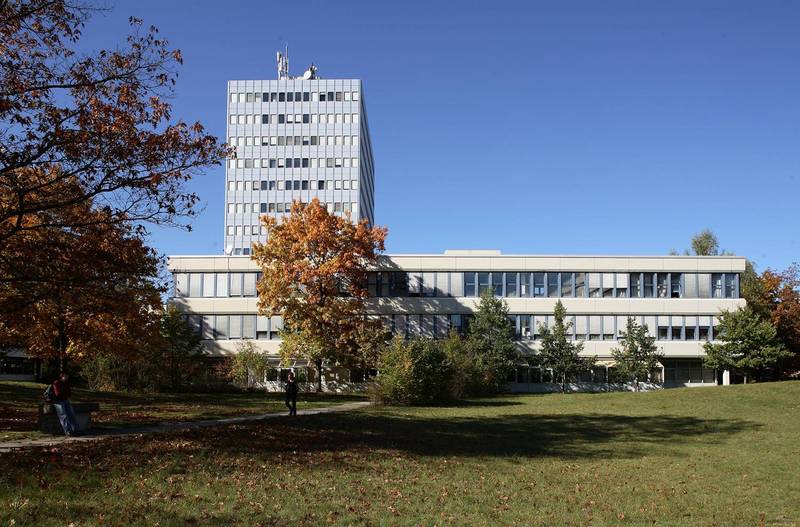
The University of Erlangen-Nuremberg is in a good position to offer such a program: the Computer Science Department is part of the School of Engineering and there are many projects carried out jointly by computer scientists and other engineers. Interdisciplinary education in computer-oriented technical subjects is thus a specialty of the University of Erlangen-Nuremberg. The university was the first in Germany to offer Computational Engineering (CE abbreviated) at bachelor and master levels.

Computational Engineering - an innovative interdisciplinary field

The education in Computational Engineering requires an interdisciplinary curriculum. Faculty members from several engineering departments, as well as from the computer science, mathematics and physics departments are in charge of the program. Each of the application fields is carefully adapted to the student’s background, career goals, and research interests. The study plan tailored individually for each student will include adequate course work in:

  • Computer science (e.g. algorithms, software engineering, computer architecture)
  • Mathematics (e.g. two years of engineering mathematics, numerical analysis, numerical linear algebra)
  • An application field from engineering or physical science: (e.g., thermo and fluid dynamics, computational mechatronics, computational optics, automation and control or information technology)

Because of the interdisciplinary nature of the curriculum, students take courses in subjects outside their area of specialization. Graduates of the Computational Engineering program are well prepared for research and development in positions in the industry, as well as for an academic career.